I recently caught a TV screening of The Boys from Brazil, a film adaptation of Ira Levin’s novel, concerning the nefarious actions of Dr. Josef Mengele in South America, and his pursuit by a Nazi-hunter presumably modelled on Simon Wiesenthal. Certainly a rather motley cast, with Laurence Olivier showing why he is so often cited as amongst the highest echelons of English-speaking acting, whilst James Mason poorly attempts to cover up his stiff accent. Still not entirely sure what to make of Peck’s performance.
Ever wondered why the spines on your books and DVDs aren’t all oriented the same way? Why some read top-to-bottom and others read bottom-to-top? Admittedly, this phenomenon is rare with books printed in the Anglophone world, where the top-to-bottom approach is preferable, but take a look at a bookshelf in continental Europe and you’ll probably find the titles read the other way (or both, according to Wikipedia
).
For anyone who recently enjoyed Hot Fuzz, this new film looks like it will carry the torch where Shaun of the Dead previously led the way. 28 Days Later meets Dog Soldiers?
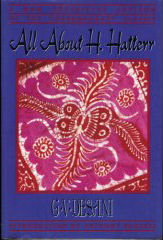
It’s difficult to know what to make of G. V. Desani’s ludicrous autobiography, All About H. Hatterr. As a pure work of literature, the confusing employment of language has led to its comparison to Joyce
, and as an author Desani has been compared to the likes of Joseph Conrad and Vladimir Nabokov for his use of English instead of a maternal tongue. Yet it is also a work of continued interest to the post-colonialist in its epitome of cultural interchange, Desani being described erroneously as a métèque author.
So they’re silly. So they’ve been going since the ’60s. So this is the twenty-first (official) outting of the sixth incarnation of a spy who has survived promotion, demotion and the Cold War. It’s a Bond film, and one purporting to go ‘back to basics’ with a new face and a general overhaul for the series. As one of those heretics who preferred the slightly heightened realism of the Timothy Dalton era, this film showed plenty of promise with a conspicuous absence gadgets, a somewhere near realistic plot, and nary a nuclear device in sight.
It’s been compared to the series reboot that Batman Begins provided, and for all its grittiness and mortality of the main character, has been lauded by the critics, whilst simultaneously pleasing fans for remaining true to the Bond brand. Daniel Craig proved to be a controversial choice, but from his experience behind the lines in Archangel and some technical bomb-making expertise in Munich, he came well prepared to play the UK’s most dangerous export.
This cute little programme appeared on Channel 4 television on Saturday evening, featuring Benn posing a short number of questions to TV and radio noteables John Humphrys, Jon Snow, Nick Robinson and Jeremy Paxman. Whilst it probably didn’t receive the kind of attention it deserved, and no doubt was shorter than Tony Benn would have liked, the programme elicited some interesting points of view from the various high profile interviewers.
Well the Steam trial of Red Orchestra’s standalone game is over now, it’s time to take stock and wonder if it’s worth buying. And what’s the first word which springs to mind when reviewing this game? It’s ‘different’. Whether that is a good or a bad thing is difficult to decide. The pointed devotion to realism in the game generally outweighs anything we’ve seen before, perhaps going so far as to outweight Bohemia Interactive
’s Operation Flashpoint of old, the game which brought us a realistic portrayal of the speed of sound. But certain problems with the game engine, and the way the ‘realism’ factor affects players’ approach to the game at times detract from what the game’s authors have been trying to achieve.
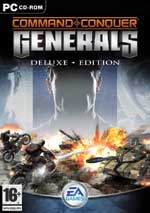
Obviously C&C Generals and her Zero Hour expansion pack are neither new nor even current titles, so this review comes rather late in the day. Nevertheless, with the next generation of titles in the pipeline from EA (in the guise of C&C3) and Chris Taylor’s Supreme Commander (spiritual successor to Total Annihilation), it might be worth highlighting a few of the problems with this older incarnation of the RTS genre. Whilst the genre was built on the single-player campaigns of the original C&C and co., it lends itself beautifully to the world of multiplayer, and this is where the focus of this little review lies. First of all, it is only fair to point out that EA have managed to create an untypically balanced game out of the three very varied factions. When one counters in the major differences attributable to the ‘Generals’ of the game’s expansion pack, it is surprising that, at least to a mediocre standard of play, the game offers twelve competitive teams and therefore plenty of diversity in tactics, as teams try to exploit one another’s weaknesses. Of course, this is not to say that certain combinations of opponents do not bias the outcome of the game, and at the top level of the game it should not normally be possible, for example, that a China Infantry team will beat a GLA Toxin enemy. Yet simply by looking at the daily win percentages produced on the game’s online service, one can see that although one or two teams generally have a slight advantage statistically, in general the spread between the twelve factions in terms of victories is very close.
It should be pointed out that these observations take into account only a low-to-medium standard of play. Naturally at the top end of the game, the rules change almost beyond comparison. But the basic point is that C&C Generals still has regular players of all standards, and as a result, gamers can expect a wide variety of different tactics being produced on the field. The closer one gets to the top, of course, the more emphasis on the ‘real-time’ strategy elements of the genre, i.e. time management - the rush. Getting troops onto the field, micromanaging them, and using them to the greatest effect is the essence of the game, and new players will often find a number of variants in this line being used against them. But to make comparison with WarCraft 3, where nearly every game for the beginner will end in a high-level undead hero and an army of crypt fiends storming into their base, whilst they are yet fighting some local creeps, new C&C Generals/Zero Hour players can expect to at least put up a fight, even where this may sometimes feel to be completely ineffectual.