
logo

Playing the Game

It’s about coming up to another one of those birthday events soon, the kind where you get together with a few close friends, have a meal, a few beers, perhaps watch a movie, before whiling away the rest of evening playing a board game. And as it’s in the UK, you only need a few guesses before you’ll stumble upon which game that will be.

Now I don’t claim to be any kind of expert in the field of board games, but that serious lack of diversity in most UK households makes most games evenings feel like you’re stuck in the same old rut again. Take a look at Wikipedia’s list of popular games, and you might see what I mean. Ignoring those that aren’t easily or commonly played in groups, there’s Cluedo, Monopoly, Risk, and Trivial Pursuit. And let’s face it, if a household has anything, it’s probably one of those. Of course, there’s plenty of fun to be had there, but to be honest there just isn’t enough variety in what’s usually available.
3 minutes to read

Return to Team Fortress

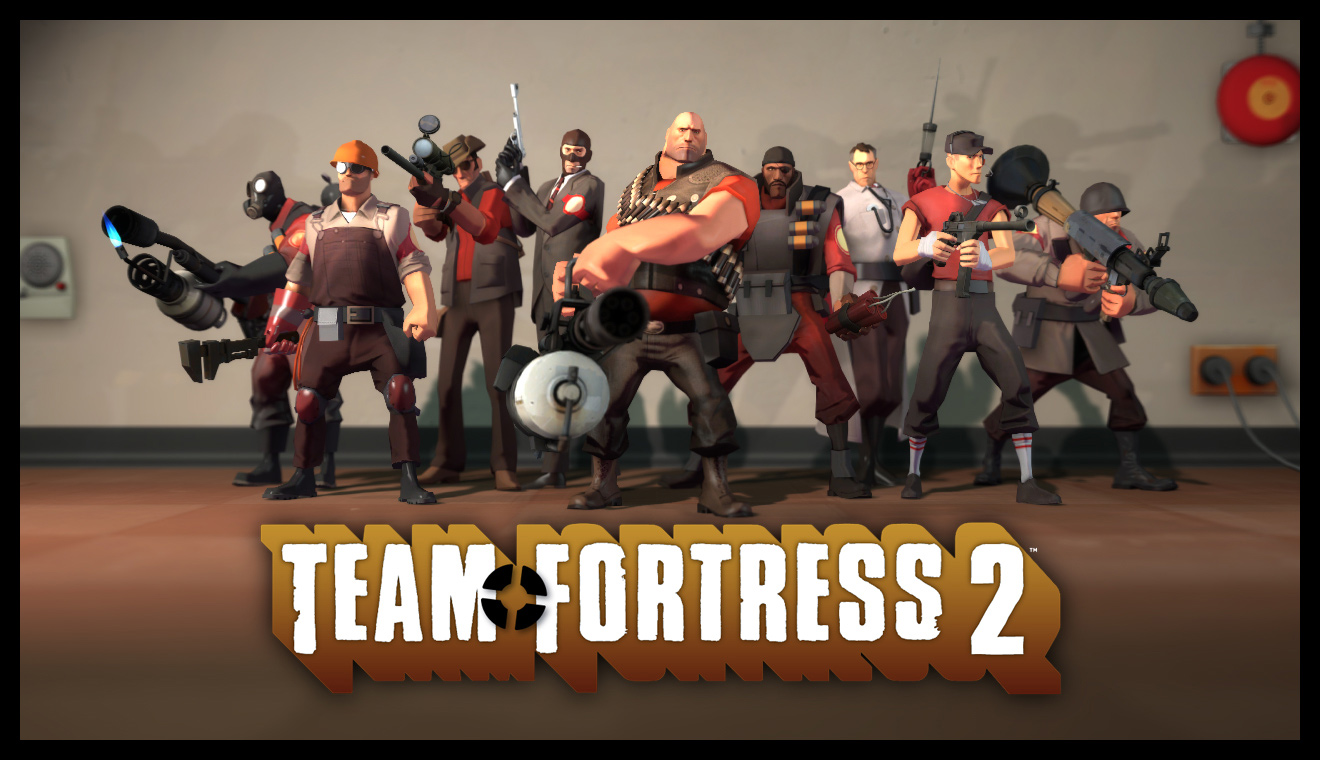
After playing Valve’s last flagship multiplayer game, Team Fortress 2, on and off over the past year, I’ve had some of my initial thoughts change since my post earlier this year. A raft of modifications, patches and packs have tweaked the game’s dynamics and bolstered its features such that the game now exudes a certain amount more polish than previously. My earlier speculation that Valve would not have the time (or eventually the inclination) to produce ‘service packs’ for that other classes in the game, after the length of time the original Medic pack took to be released, seems to have been disproved, with two further releases in the intervening period. These packs not only added achievements and unlockable weapons to two further classes, the Pyro and the Heavy, but also added extra game modes and maps.

I had originally written this post, long lingering in the limbo of the drafts bin, pointing out a number of weaknesses with the game as it stood. The most recent patch has done much to address those problems, and is a welcome and rather unexpected update, given Valve had denied there would be any releases for Team Fortress 2 until 2009 on account of the amount of work going into their latest release, Left 4 Dead . I’ve gone through and added some comments or changes where necessary, to reflect the recent update, though on the whole this post retains its original state.

13 minutes to read

WordPress 2.7 Update

True to form, the WordPress team have brought out another much-improved version of their popular blogging software. Having just updated the blog, it’s clear to see the amount of work which has gone into this release, and how many feature enhancements and bug fixes have been rolled out over the course of last year. Whilst it’s normally difficult from an end-user perspective to see how much work has been done on the backend, this release provides such a clean, intuitive and flexible interface that it’s easy to see how WordPress can now move forward with other things. All of the project members and contributors should be rightly proud of their achievement.
One minute to read

The Future of File-Sharing

The war against file-sharing that currently rages primarily over the Internet will ultimately be lost. That’s my prediction. I can’t support this argument with any authority, being no expert in the fields of law, politics or technology, but instead make my statement on the basis of many years’ observation from the wilderness. But the trends all point to this being the case. File-sharing has become a mainstay of this new generation, a fact which has forced most corporations and organisations to rethink their strategies and come up with ways to stem the tide. We have already seen many changes in this direction, such as the explosion of digital content that is now available online from legitimate sources. But in addition to this carrot, the war is also being waged with a stick, as organisations set out to have legislation passed to clamp down on file-sharing activities, and new technologies are created to lock down digital content and prevent its spread. So what will the future bring?

8 minutes to read

New Domain Name

After more than two years at a temporary location, and in part to celebrate breaking the hundred post barrier (albeit almost unnoticed), this blog has ‘moved’ to a new location. Whilst the hosting remains the same, the blog can now be found under the new domain name amindatplay.eu . There may be a few broken links around the place, but everything seems to be working well so far. With the amount of work being done to release WordPress 2.7 in November, it might also be time for a bit of a clean before winter hibernation, so perhaps expect a few tweaks and perhaps an experimental new layout or two in the next few of weeks.
One minute to read

Juice on Vista

Whilst installing the latest version of Juice, a cross-platform podcast receiver on Windows Vista, I came across a rather simple error that prevented the program from functioning correctly on the first load, and then from loading thereafter. The error log generated the following output (where xxx indicates the username):

Traceback (most recent call last):
File "gui.py", line 4, in ?
File "iPodderGui.pyc", line 3573, in main
File "ipodder\configuration.pyc", line 468, in __init__
File "os.pyc", line 154, in makedirs
OSError: [Errno 2] No such file or directory: 'C:\\Users\\xxx\\My Documents\\My Received Podcasts'

Fortunately the fix seems to be quite simple and pain free (though a bit of a hassle to implement manually), found courtesy of Randall’s Life .

One minute to read

Support for Renewables

We’ve had a pellet boiler installed at these premises for a number of years, and whilst generally pretty efficient and reliable, recently there were some problems which couldn’t be solved with the usual panache of just hitting it and telling it to work. The boiler, a 15 kW Künzel PL15 , had got stuck in a de-ashing cycle and would only intermittently fire up before returning to this cycle. Unfortunately, the firm which installed the boiler had in the meantime gone out of business, and our only option was to send for an engineer from a neighbouring county, which took several days, before the unit could be looked at. It turned out to be a problem with the microprocessor controller, the piece of kit which maintains the boiler’s high efficiency, though obviously beyond our capabilities to solve without sufficient technical knowledge (even the engineer who appeared on site had to call back to base for instructions that weren’t included in his handbook).
2 minutes to read

Rise and Fall of the Blogosphere

A recent Wired article has certainly provoked some controversy amongst bloggers. Claiming that blogs are history, and that Twitter, Flickr and Facebook are the future, the post’s author Paul Boutin recommends that anyone who’s thinking of starting a blog should stop, and anyone already writing one should pack it in.

Whilst I wouldn’t normally comment on a post of this ilk (given my feelings about bloggers who blog about blogging) it seems pretty clear that unless Boutin is giving us a tongue-in-cheek excuse for a debate on web trends, he’s essentially wrong in his assessment. After all, it comes as no surprise that Boutin proclaims the fall of the blogosphere from the comfort of a blog entry, nor indeed that he rails against his own ilk in decrying the “tsunami of paid bilge” that ranks highest on the Technorati charts. The idea that blogs should be abandoned on account of the fact that personal blogs rarely garner any extended readership or popularity calls into question why authors set up their blogs in the first place, and why indeed they should switch to other means if popularity is their main objective. Boutin upbraids blogs for being text-only affairs, a charge which I daresay isn’t especially accurate, particularly since it is easily possible these days to integrate precisely those services that are supposed to supercede blogs, such as Flickr or Youtube.

2 minutes to read

Capital for the Third World

I recently came across a wonderful idea for providing peer-to-peer lending to entrepreneurs in developing countries. The idea seems akin to the principles of the Grameen Bank, providing microcredit in this case primarily as a form of aid. The system allows people with spare cash to browse potential applicants and offer them money in the form of a loan. Kiva works with what they term experienced ‘field partners’ to provide the loans, these bodies being established and recognised sources of finance (which may charge interest on the money to the borrower). Eventually the loans are repaid and the money can be withdrawn, redistributed or donated to Kiva to help cover their organisation’s costs. Of course the levels of finance are fairly miniscule on the larger scale, a far cry yet from providing the many milliards needed to create the level of sustainability needed in many parts of the developing world, through stability, infrastructure, education etc. Yet Kiva has plenty of room to expand, and importantly the principle behind the organisation is sound, in trying to create a direct link between people in the developing world who need capital (and know what they want to do with it) and those with the money and the conscience to try and help. Time will tell how effective Kiva’s mission will be.

2 minutes to read