logo

The Jobs Effect

Steve Jobs is not a monster. He is an all-American maverick and a world-class marketing genius. But until a man or woman as powerful as he is arrives at Apple (over his dead body), who is determined to break the cycle he has indulged in for so many years, Apple will remain merely an icon of awe. It will not become a company of the size that truly could (and should) “bury” monsters like IBM.

One minute to read
memoQ and XSLT: Fun with Namespaces

memoQ and XSLT: Fun with Namespaces

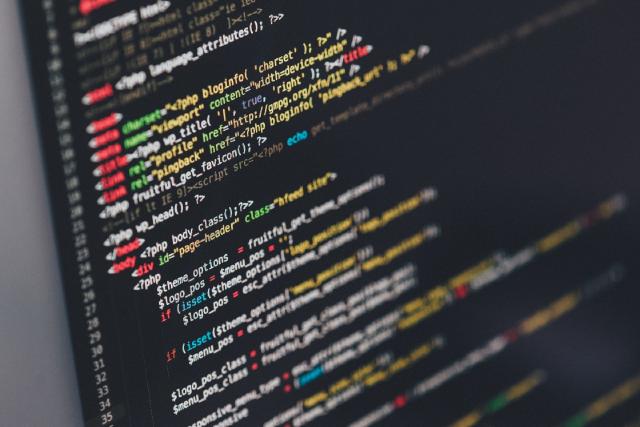
Using memoQ to translate standard XLIFF (XML Localisation Interchange File Format) files can be made that bit more user friendly when you take advantage of the built-in feature to use XSLT transformations . Since I can’t get my head around namespaces, my simple transformation ended up strewn with unreadable references to local-name() nodes. As ever, there is an easier way.

Take a standard XLIFF file along the lines of:

<?xml version="1.0" encoding="UTF-8"?>
<xliff version="1.0" xmlns="urn:oasis:names:tc:xliff:document:1.2">
   <file source-language="en" datatype="plaintext" original="Project">
      <header/>
      <body>
         <trans-unit id="string">
            <source>This is the source content.</source>
         </trans-unit>
      </body>
   </file>
</xliff>

We can identify the nodes in the source using standard XPath syntax having defined the namespaces in the header:

2 minutes to read
memoQ QA Check Tweak

memoQ QA Check Tweak

memoQ has a handy little feature as part of its QA check which warns you whenever you double up a word in the target language. I’ve had it catch numerous little and ands and to tos which slip into my work on occasion. However certain combinations of doubled up words are fairly commonplace, which can lead to this feature producing lots of unnecessary false errors. A classic example in English might be two hads in a sentence like ‘I had had enough,’ but that pales in comparison to a language like French, which sees plenty of doubled up words in pronominal verbs (nous nous lavons, vous vous souvenez etc.)
2 minutes to read
On Lady Mondegreen’s Eggcorns

On Lady Mondegreen’s Eggcorns

Imperfection is part and parcel of how we communicate, and one of the beautiful things about the evolution of language is how little imperfections can create entirely new constructs, as words and phrases are misheard, misunderstood, misinterpreted and misstated. One of my favourite examples in this regard is the ‘mondegreen’, a term normally used to denote a misheard song lyric, although it originated with a line of poetry:

Ye Highlands and ye Lowlands, Oh, where hae ye been? They hae slain the Earl o’ Moray, And Lady Mondegreen.Percy’s Reliques of Ancient English Poetry

2 minutes to read
Language Weirdness

Language Weirdness

In the weird and wonderful world of words, which world of words is the weirdest? And if we replace ‘weird’ with ‘hard’, we find one of those eternal questions facing language learners: which language is more difficult?
4 minutes to read
The Blind Watchmaker

The Blind Watchmaker

Blind Watchmaker
What is it about the theory of evolution which makes it so difficult to comprehend? Why does it require a leap of faith for many people to understand? And why do they feel they need to believe in evolution in a way they never would with, say, gravity?

Having finally got around to reading The Blind Watchmaker this year, one remark really stuck in my mind, when Dawkins turned to describing the human experience in terms of units. The way we perceive the world around us is intrinsically bound to the way we encounter it. We consider time, for instance, within a fairly specific range. Once we go beyond that range, our natural, indeed evolutionary faculties are incapable of perceiving the world outside those bounds with any degree of accuracy. That’s not to say we hit a brick wall when we step beyond that range. We’re still perfectly capable of contemplating the meaning of extremely long or short timescales, for example. We can measure them, compare them, calculate them; we can analogise and use metaphors. But we are far from being able to really grok what they mean.

4 minutes to read